2026 ACC/AHA Guideline on Management of Dyslipidemia
Seen with resident — Source: ACC.org, published JACC March 13, 2026
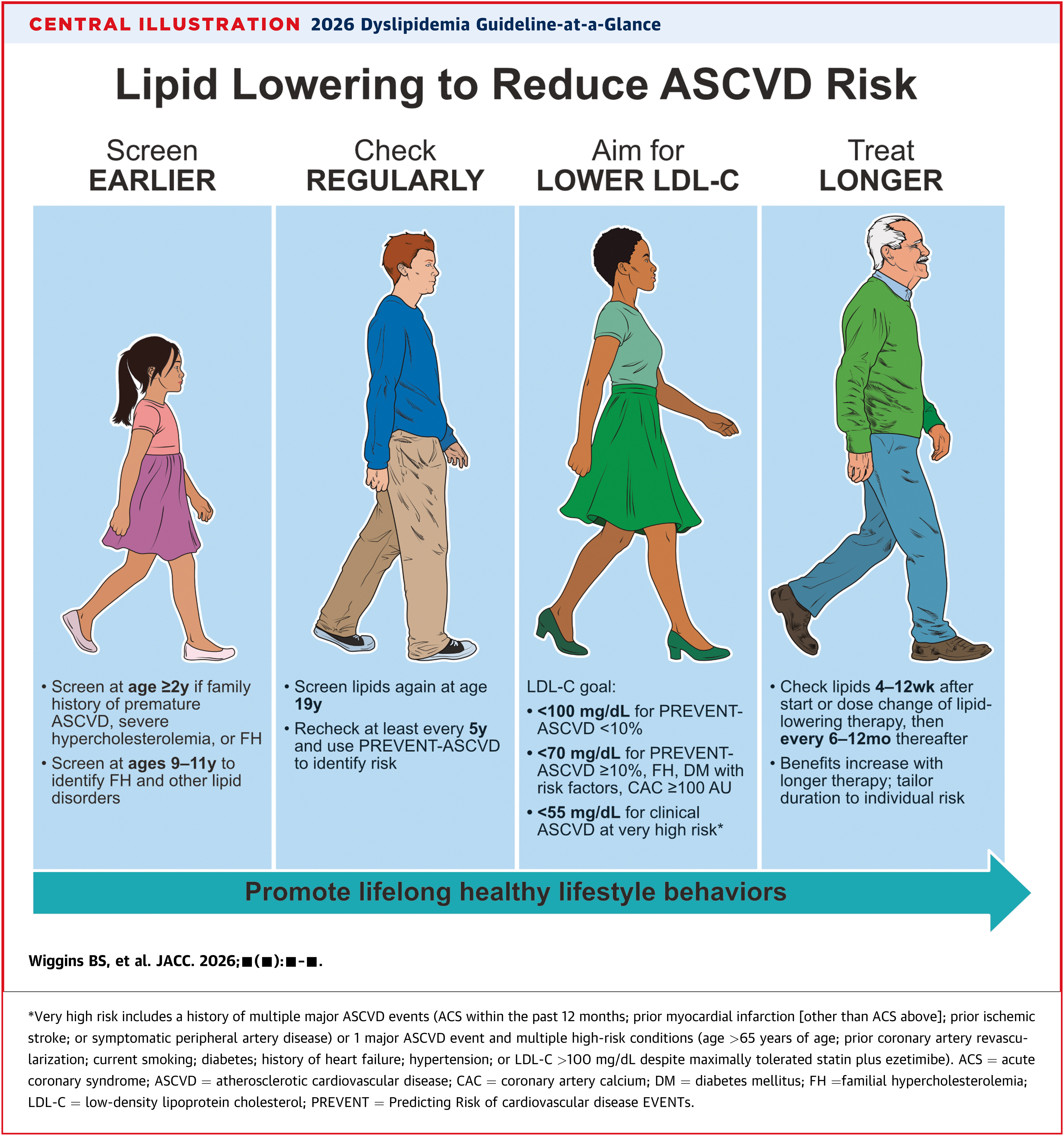
Full title: 2026 ACC/AHA/AACVPR/ABC/ACPM/ADA/AGS/APhA/ASPC/NLA/PCNA Guideline on the Management of Dyslipidemia Replaces: 2018 Blood Cholesterol Guideline
Key Changes & Highlights
Early Intervention
- Healthy lifestyle changes recommended starting in childhood
- Pharmacotherapy for youth with familial hypercholesterolemia
- Consider treatment in young adults with LDL-C ≥160 mg/dL or strong family history
Risk Assessment — New Equations
- Use PREVENT-ASCVD equations (replaces Pooled Cohort Equations) for adults aged 30–79
- LDL-lowering therapy:
- Reasonable for 3–5% 10-year ASCVD risk (after shared decision-making)
- Recommended for ≥5–10% risk
LDL-C Treatment Goals
| Risk Category | LDL-C Goal |
|---|---|
| Borderline / Intermediate risk | <100 mg/dL |
| High risk | <70 mg/dL |
| Very high risk (established ASCVD) | <55 mg/dL |
Additional Testing
- Coronary artery calcium (CAC): for men >40, women >45 with borderline/intermediate risk — helps guide statin decisions
- Lipoprotein(a): measure once in adulthood for all patients
- Apolipoprotein B: useful for residual risk evaluation
Nonstatin Therapies
- Ezetimibe, bempedoic acid, PCSK9 inhibitors, inclisiran (add-on to statins)
- Used when LDL-C goals not met on maximally tolerated statin
Special Populations
- Individualized approach for: CKD, HIV, diabetes, cancer survivors
- Specific guidance for pregnancy and lactation